Look Closer
At the macro scale, these are walls and monuments. At the micro scale, they start to look alive.
Pyramids Under the Microscope
Scanning electron microscopy of Great Pyramid limestone reveals nanospheres of amorphous silica — a structure that doesn't form naturally in limestone. The stones are significantly more hydrated than quarry samples from the same region. Under magnification, internal structures show highly disorganized, almost organic patterning.
Barsoum, Ganguly & Hug (2006) — Journal of the American Ceramic SocietyCusco's Impossible Joints
The walls of Sacsayhuaman fit so precisely that a sheet of paper cannot pass between blocks. Under close examination, the joints show concave-convex interlocking surfaces — a bookmatching technique that mirrors how biological cell membranes adhere. The shapes are irregular, yet they tessellate perfectly, like cells in tissue.
Sacsayhuaman archaeological surveys — 400m of megalithic wall, stones up to 200 tonnesFractal Self-Similarity
Zoom into pyramid stone surfaces and you see small pyramid-like formations. Zoom into those and the pattern continues. This fractal self-similarity is a hallmark of biological growth — from fern fronds to bronchial trees to crystals. Carved surfaces don't exhibit this. Grown ones do.
Fractal geometry analysis — Giza complex archaeological surveyBiology vs. Stone
When you put living systems next to megalithic construction, the visual rhyming is hard to ignore.
🌱 Biological Structures
- Cell membranes form tight, irregular seals between adjacent cells — no gaps, no mortar
- Tissue growth produces irregular shapes that tessellate perfectly through contact inhibition
- Coral polyps build massive calcium carbonate structures through slow mineral accretion
- Stromatolites — layered sedimentary formations built by cyanobacteria over millennia
- Fractal branching: same pattern at every scale, from capillaries to river deltas
- Crystallization produces precise geometric faces through molecular self-assembly
🏛 Megalithic Structures
- Sacsayhuaman joints form tight, irregular seals between adjacent stones — no gaps, no mortar
- Block shapes are irregular yet tessellate perfectly, as if they grew against each other
- Pyramid limestone shows calcium carbonate with unusual hydration and amorphous silica nanostructures
- Layered construction with varying material density, similar to sedimentary biosignatures
- Fractal self-similarity: small pyramidal formations appear within pyramid stone surfaces
- Geometric precision across massive scales — Great Pyramid aligned to 3/60th of a degree
Hexagonal columnar basalt at Giant's Causeway proves that nature can produce 40,000 perfectly geometric columns through physics alone. No tools, no plans, no workers. Just cooling lava and the mathematics of efficient space-filling — the same mathematics that governs cell packing in biological tissue.
Columnar jointing — National Park Service geological studiesThe Parallels in Photos
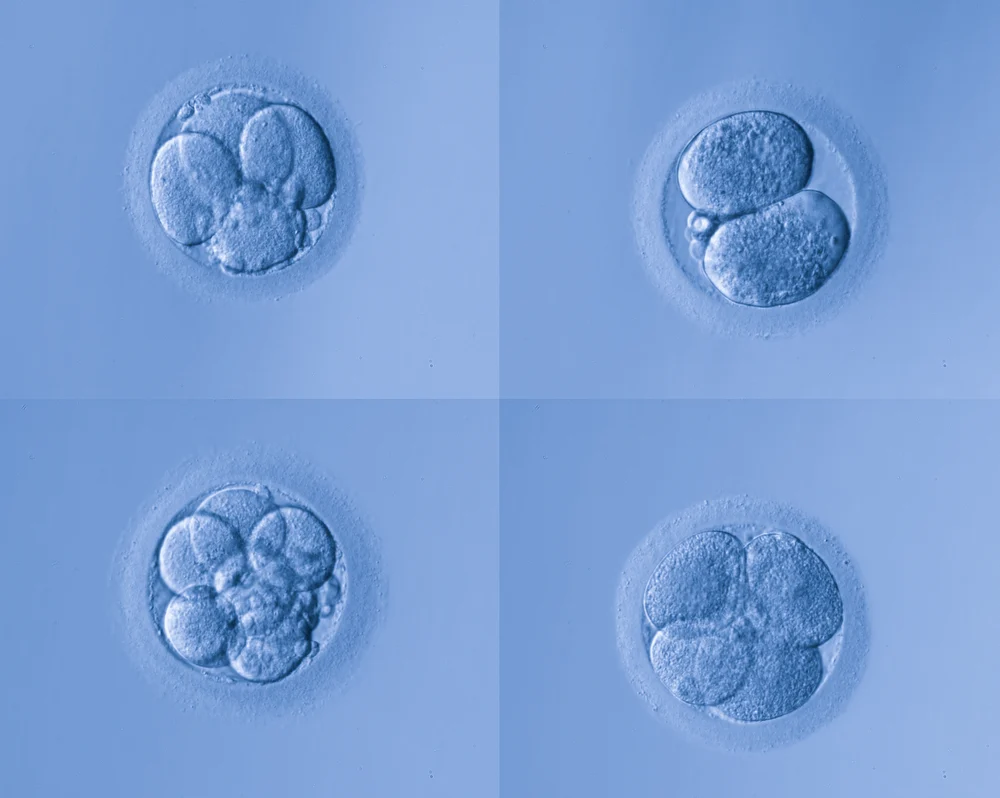
Biology, geology, and megalithic stone — the same geometry at every scale.
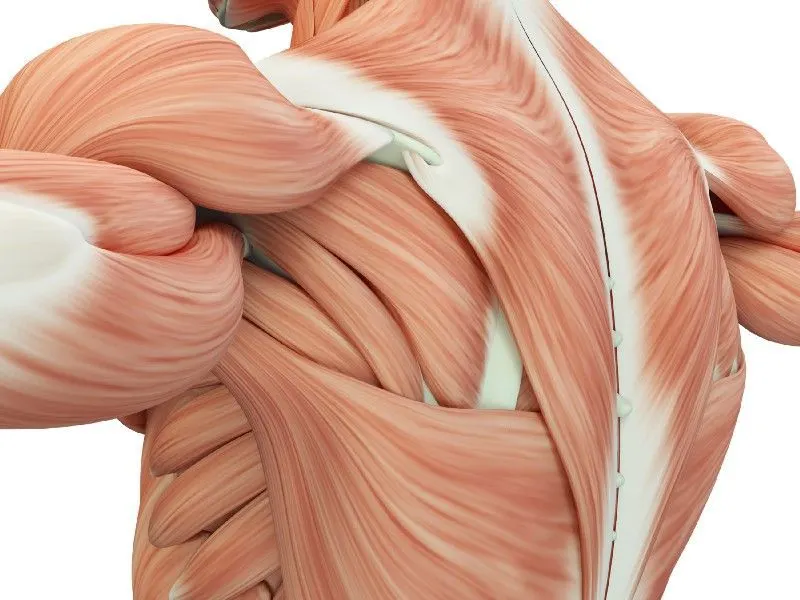
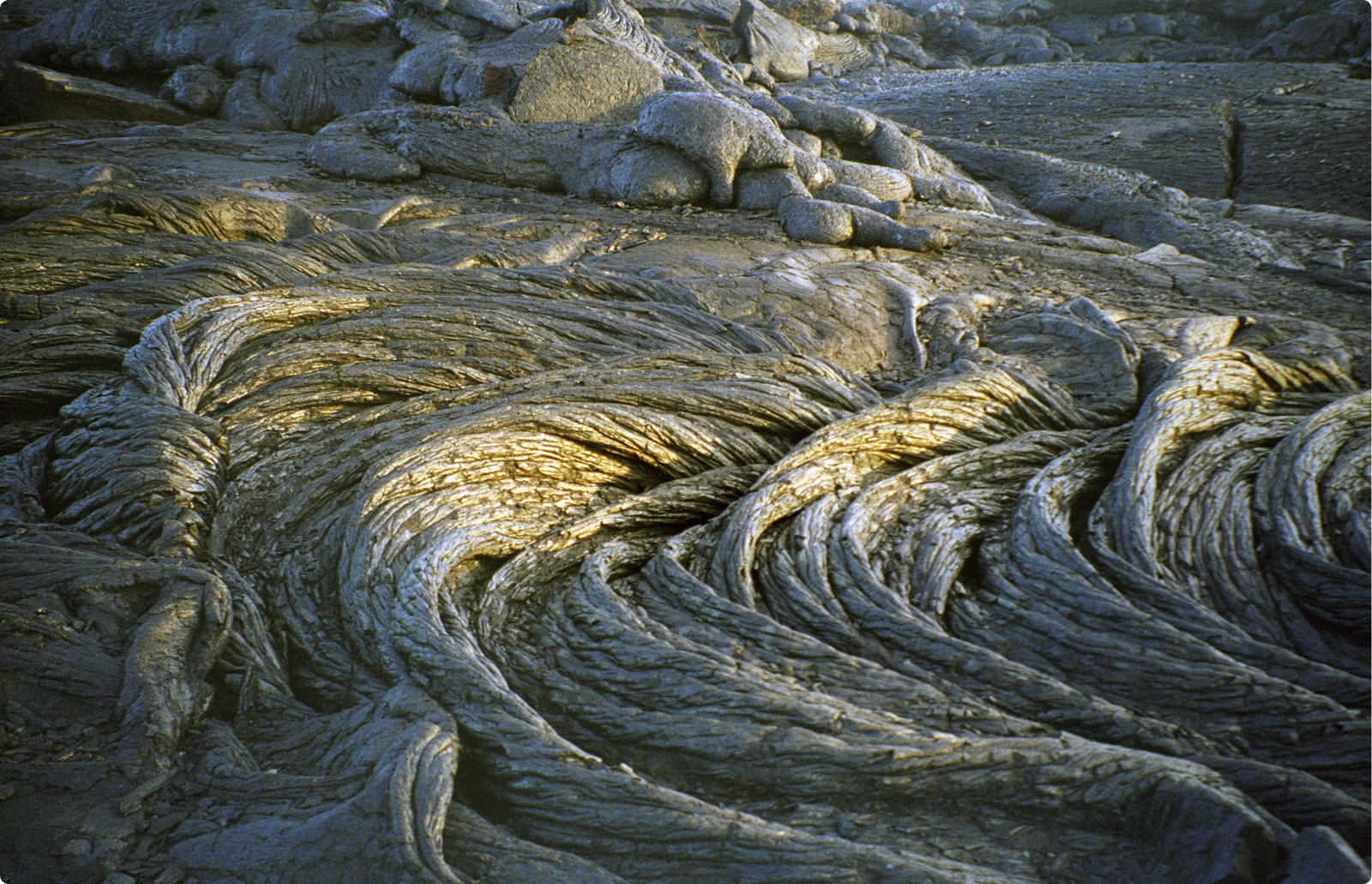

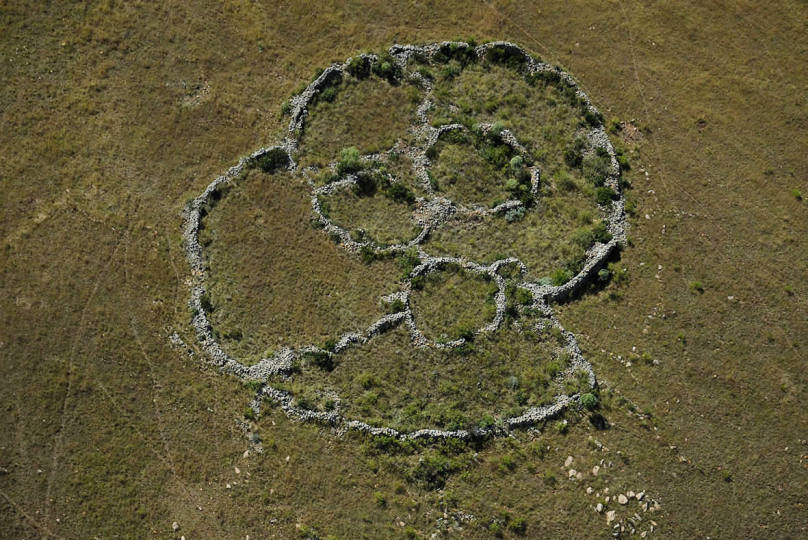
The Geopolymer Hypothesis
One established theory already challenges the "carved stone" narrative — and it opens the door further.
Davidovits proposes geopolymer concrete
French materials scientist Joseph Davidovits argues that pyramid blocks were not quarried and dragged but cast in place — soft limestone dissolved in water, mixed with lime and natron, packed into molds where chemical reactions hardened it like concrete.
Barsoum publishes peer-reviewed evidence
A study in the Journal of the American Ceramic Society finds microstructural evidence consistent with reconstituted limestone — amorphous silica nanospheres and hydration levels that don't match natural quarry stone from the region.
Mainstream archaeology pushes back
Most petrographers argue the stones are natural limestone. The debate continues. But even the conservative reading acknowledges: something about these stones doesn't look like normal rock under a microscope.
If not carved, and not cast — then what?
The geopolymer theory gets us partway: the stones may have been formed in situ rather than transported. Gaia Grown asks: what if the process was even more fundamental? What if the Earth itself has mechanisms for producing these structures — mineral accretion, crystallization, biological mediation — that we haven't fully recognized?
Nature Already Does This
We don't need to invent new physics. We just need to look at what geology and biology already produce.
Columnar Basalt
Cooling lava contracts into hexagonal columns — 40,000+ at Giant's Causeway alone. The hexagonal geometry emerges because it's the most efficient way to tile a plane. The same principle governs honeycombs, cell packing, and bubble rafts. No intelligence required. Just physics optimizing.
Coral Reefs
Tiny organisms build structures visible from space. The Great Barrier Reef spans 2,300 km — constructed atom by atom through biological mineral deposition. If life can build that, what could a planet-scale process build over geological time?
Crystal Growth
The Cave of Crystals in Naica, Mexico contains selenite beams 12 meters long and weighing 55 tonnes. They grew over 500,000 years in mineral-rich water at 58°C. Precise geometric faces. No tools. Pure molecular self-assembly at geological scale.
Stromatolites
The oldest visible structures on Earth — 3.5 billion years old. Layered domes of calcium carbonate built by cyanobacteria, one microscopic layer at a time. Living geology. The boundary between biology and rock doesn't exist here.
Petrified Forests
Wood replaced molecule by molecule with silica, preserving cellular structure in stone. The organic becomes mineral. The grown becomes geological. Trees that are now rock — still showing the cell walls, the growth rings, the living architecture.
Fairy Chimneys
Cappadocia's hoodoo formations in Turkey — towers of tuff capped with harder basalt, sculpted by differential erosion into structures that look engineered. Ancient people carved homes into them, recognizing that the Earth had already done most of the work.
What If?
What if certain geological and biological conditions — mineral-saturated groundwater, specific temperature gradients, microbial colonies, electromagnetic fields, tidal forces — could converge to produce large-scale mineral accretion in geometric forms? What if the ancient builders didn't move 2.3 million blocks to build the Great Pyramid, but instead understood how to create the conditions for the Earth to grow them?
❓ Open Questions
- Can mineral accretion be guided or accelerated by biological processes at scale?
- Do electromagnetic fields influence crystallization geometry in ways we haven't mapped?
- Could microbial mat communities mediate large-scale calcium carbonate deposition in specific shapes?
- What would "grown stone" look like under electron microscopy vs. quarried stone?
- Are there active sites on Earth today where mineral growth produces geometric structures?
🔎 What to Look For
- Amorphous vs. crystalline microstructure in megalithic stone samples
- Hydration levels inconsistent with natural quarry limestone
- Fractal self-similarity at multiple magnification scales
- Cell-membrane-like boundary structures at block interfaces
- Biosignatures: fossilized microbes, organic residue, or isotope ratios suggesting biological mediation
Disclaimer: Gaia Grown is a speculative exploration, not a claim of established science. The visual parallels presented here are real and documented, but the interpretation — that megalithic structures may have been grown rather than built — is a hypothesis, not a conclusion. We present it as an invitation to look closer, question assumptions, and consider that the boundary between geology and biology may be more porous than we think.
Where to Look
Megalithic and monolithic sites around the world that exhibit these patterns.
Great Pyramid of Giza
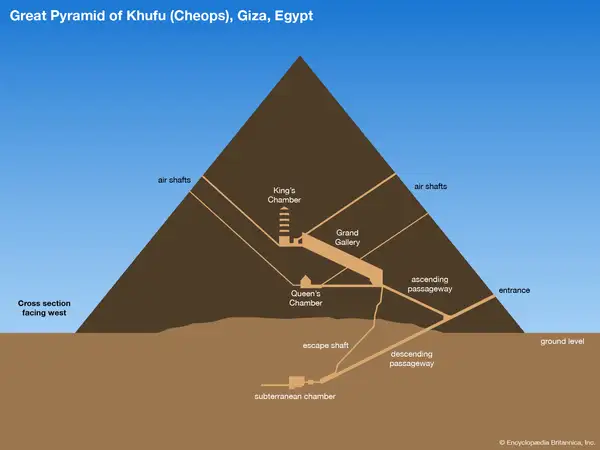
2.3 million blocks, average 2.5 tonnes each. Microstructural anomalies in limestone. Aligned to true north within 3/60th of a degree. Internal chambers show precision that modern construction struggles to replicate.
Sacsayhuaman, Cusco
Stones up to 200 tonnes fitted without mortar. Irregular polygonal blocks that interlock like puzzle pieces — or cells. Earthquake-resistant due to the interlocking geometry. 400 meters of wall at 6 meters height.
Baalbek, Lebanon
The Stone of the Pregnant Woman: 1,000 tonnes. The Trilithon: three blocks at 800 tonnes each, elevated to 7 meters. The largest worked stones in the ancient world. How — or why — would anyone move these?
Puma Punku, Bolivia
H-shaped diorite blocks with machine-like precision. Interlocking forms that look injection-molded. The stone is andesite — one of the hardest materials on Earth. At 3,800 meters elevation on the Altiplano.
Ollantaytambo, Peru
Massive rose granite blocks transported from a quarry 6 km away and 600 meters below. Fitted with thin stone spacers between blocks — a technique with no modern equivalent. The quarry shows abandoned blocks that look half-formed.
Gobekli Tepe, Turkey
12,000 years old — 6,000 years before Stonehenge. Massive T-shaped pillars carved with animal reliefs. Built by hunter-gatherers with no metal tools, no pottery, no agriculture. Then deliberately buried. The oldest monumental architecture on Earth.
Why Atoms Stack Into Pyramids
Gaia Grown isn't just geology. It connects to a deeper question about how matter organizes itself at every scale.
The Stacking Principle
The Interconnected Atom Theory proposes that when atoms stack together, a tiny fraction of the binding force — the Ziehr constant (εZ) — extends past the last atom, creating a residual pull in every direction. This residual force is what we call gravity.
But here's what matters for Gaia Grown: atoms don't stack randomly. They form crystals. Lattices. Hexagonal columns. Pyramidal structures. The geometry of atomic stacking dictates the geometry of everything built from atoms — from quartz crystals to basalt columns to... pyramids?
Scale-Invariant Geometry
Look at a bismuth crystal under magnification: staircase pyramids. Look at basalt columns from above: hexagonal tessellation — identical to cell walls. Look at the joints in Cusco's walls: fitted polygons, exactly like biological tissue at 100x magnification.
These aren't coincidences. They're the geometric consequences of atoms stacking in three dimensions. The same stacking forces that produce crystal faces at the molecular level produce columnar jointing at the geological level. The pattern repeats because the mechanism repeats.
Time and Growth
The size-time hypothesis proposes that time moves slower at smaller scales. If true, geological processes that appear to take millions of years in our time might, at the molecular scale where crystal growth happens, involve an unfathomable number of "moments" — plenty of time for complex, self-organizing structures to emerge through nothing but atomic stacking and residual force.
A pyramid doesn't need a pharaoh. It needs atoms, time, and the geometry that stacking demands.
The Unified Thesis
Atoms stack. Stacking creates force. Force creates geometry. Geometry repeats at every scale.
Cell walls, crystal faces, basalt columns, megalithic joints, pyramidal structures — they all share geometry because they all share the same underlying mechanism: matter organizing itself through the quadrupolar stacking force, expressing the same patterns whether you're looking through a microscope or standing at the base of the Great Pyramid.
We don't claim the pyramids grew like trees. We observe that the same geometric patterns appear in biological growth, crystal formation, and megalithic architecture — and we propose that the same physics drives all three.
How to Falsify Gaia Grown
A theory that can't be killed isn't science — it's faith. So here is the opposite: five experiments, each with an explicit pass/fail prediction. If grown stone is real, it carries signatures that carved stone cannot fake. Find even one, and we have a foothold. Find none, and the theory is dead. That's the deal.
The Claim, Stated So It Can Be Killed
“Megalithic blocks formed in place by mineral accretion and biological mediation — they were grown, not cut.” That single sentence predicts specific, measurable things a carved block could never show. Every experiment below is a yes/no test against it.
1. The Contact-Surface Test
A carved joint is two independently shaped faces pressed together. A grown joint is one continuous mineral fabric that crossed the seam while soft. Core straight through a Sacsayhuamán joint and put it under a petrographic microscope.
Carved → crystal grains stop dead at the interface: two populations, one sharp boundary.
Grown → grains, growth bands, or pore networks continue across the seam.
2. Isotope & Biosignature Hunt
Biological mineralization fractionates carbon and oxygen isotopes in ways abiotic carving cannot. Measure δ13C and δ18O on the block versus its supposed parent quarry, and screen the matrix for lipid biomarkers and microbial body fossils.
Quarried → isotopes identical to the quarry, no organics.
Grown → a fractionation offset, or a biosignature the quarry lacks.
3. Internal Geometry (Micro-CT)
Carving removes material from the outside in — it leaves no internal order. Growth builds outward and inward. Micro-CT a sample and look inside.
Carved → homogeneous, or only natural sedimentary bedding.
Grown → concentric accretion layers, radial fabric, a core, oriented porosity — tree-rings, basically.
4. The Fractal Claim, Made Quantitative
The self-similarity argument is measurable, not poetic. Box-count the fractal dimension D of the stone surface at five-plus magnifications, then compare against a freshly cut limestone face and a known grown surface (stromatolite, travertine).
Decoration → the numbers don't separate the three.
Real → grown stone's D matches the biological reference; cut stone doesn't.
5. Reproduce It — The Demonstration
Accretion is real: Naica crystals, travertine terraces, stromatolites, concrete-eating microbes. Seed a mineral-saturated tank with the proposed conditions — groundwater chemistry, a temperature gradient, a microbial mat, perhaps an EM field — and show geometric accretion at even centimetre scale.
A single grown right-angle or hex column under controlled conditions is worth more than a thousand photo comparisons.
The experiment that would end the debate.The Honest Scorecard
Right now the strongest real card in the deck is the peer-reviewed Barsoum / Davidovits geopolymer work — which already concludes some of these stones aren't simple quarried limestone. But geopolymer means cast, not grown: chemistry, not biology. So the smartest move is to stand on geopolymer and ask the one question past it. Cast stone is isotropic mush. Grown stone has oriented internal structure. Experiment 3 is where Gaia Grown either earns its name — or quietly collapses back into the already-respectable cast-stone theory.
The Science Behind the Speculation
The Evidence Page
Both theories tested against GPS data, biological scaling laws, the billion-heartbeat constant, and more. The honest scorecard.
Interconnected Atom Theory
Gravity as the residual force of atomic stacking. The quadrupolar pull that shapes everything from crystals to planets.
Effects of Size on Time
Time moves slower at smaller scales. Why flies dodge your hand and every mammal gets a billion heartbeats.
Emergent Spacetime
Spacetime isn't fundamental — it's what atoms build when they stack together at cosmic scales.
Interactive Fractals
Self-similar patterns at every scale. The visual language of stacking geometry, rendered in your browser.
SixPhiX
Six, phi, and the mathematical patterns that recur throughout nature and ancient architecture.
Informism — what it means
If the stone grows like a cell, what is doing the growing? Informism is the doctrine behind the geology: the System renders reality outward from one living seed, at every scale.
This is just the beginning.
Gaia Grown is an ongoing exploration. As we gather more microscopy data, geological comparisons, and biological parallels, this page will grow — organically.
Back to DriftWest